
Care Abroad in the Media: What Leading Journalists Are Reporting
From 60 Minutes Australia to Al Jazeera, some of the world's most respected news organizations have investigated the growing trend of families finding better eldercare in Southeast Asia. Here's what they found — and what it means for families weighing their options.

The Growing Media Spotlight on Care Abroad
Something is shifting in how the world talks about eldercare.
For decades, families facing long-term care decisions have felt confined to local options — options that, in many Western countries, come with staggering costs and staffing crises that show no signs of improving. But a growing number of investigative journalists, documentary filmmakers, and researchers are telling a different story: that high-quality care exists in Southeast Asia, often at a fraction of the cost, with staffing ratios Western facilities can only dream of.
These aren't promotional videos or marketing campaigns. They're produced by some of the world's most trusted news brands — organizations that built their reputations on rigorous, independent journalism. And what they found challenges nearly every assumption families hold about what "good care" has to look like.
60 Minutes Australia: "World-Class Dementia Care" in Thailand
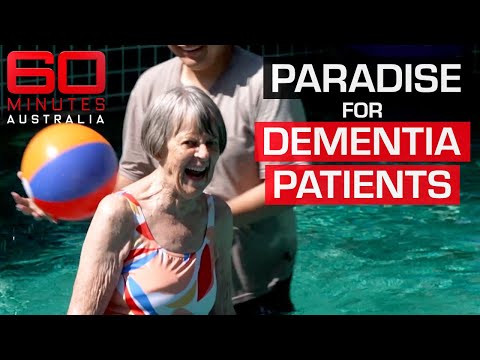

"The tropical resort providing world-class dementia care"
In this 2024 segment, 60 Minutes Australia sent a reporter to investigate dementia care facilities in Chiang Mai, Thailand. The conclusion was unambiguous: Thailand is "leading the world in dementia care."
Key Findings
- Facilities in Thailand provide 1:1 to 1:3 staff-to-resident ratios — compared to 1:10 or worse in Australian and American nursing homes
- Care costs approximately $80 AUD per day (~$52 USD), versus $55,000+ per year for comparable care in Australia
- Registered nurses provide direct, hands-on care rather than supervising aides from a distance
- Families interviewed described dramatic improvements in their loved ones' quality of life, including reduced agitation and increased engagement
The journalist's own assessment after visiting: facilities that would be considered "luxury" in Australia were the standard offering in Chiang Mai — at a fraction of the price.
Al Jazeera's 101 East: Inside Thailand's Care Facilities
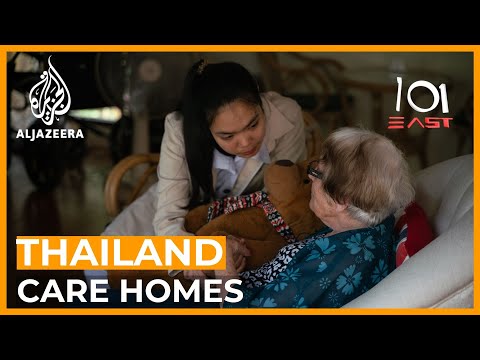

"Thailand's Last Resort"
Al Jazeera's award-winning documentary series 101 East produced this in-depth look at European families — primarily Swiss and German — who found better care for their loved ones with dementia in Chiang Mai, Thailand.
Key Findings
- Families from Switzerland and Germany describe their journey from exhausting local options to finding compassionate, individualized care in Thailand
- The documentary profiles real families and real facilities, showing daily life, activities, and staff interactions
- Cultural factors contribute to quality: Thai caregiving culture emphasizes respect for elders and patience with dementia symptoms
- The title "Last Resort" carries a deliberate double meaning — both a "resort-like" setting and a family's final option after exhausting alternatives
The reporting is balanced and thoughtful, acknowledging the emotional complexity of sending a parent abroad while showing the tangible benefits these families experienced.
play_circle Watch on YouTube (Al Jazeera English) open_in_newOur Take
What makes this documentary valuable is its honesty about the emotional journey. Families don't arrive at the decision to explore care abroad casually — it comes after exhausting options, facing waitlists, experiencing inadequate care, and often hitting financial walls. This documentary captures that reality without judgment.
The focus on European families (rather than American) is notable. The "care abroad" trend started in Europe, where countries like Switzerland and Germany have some of the world's highest care costs. American families are earlier in this curve, but facing the same pressures — especially as 24/7 home care can reach $24,000/month.
Additional Coverage Worth Reading
Beyond the two major documentaries above, the "care abroad" trend has been covered extensively by newspapers, filmmakers, and industry analysts. Here's a curated selection of the most useful coverage.
Major Newspaper Coverage

"Families sending relatives with dementia to Thailand for care"
The Guardian investigated British families placing loved ones in Chiang Mai care homes, finding eight facilities housing UK residents with dementia. The piece quotes Dr. Paul Edwards, director of clinical services at Dementia UK, who said he "can well understand people choosing this option" given the UK's "failing and ailing system." One-to-one care in Thailand costs approximately £750/week versus £700–1,000/week in the UK — but with 1:1 ratios instead of 1:6.
Read in The Guardian open_in_new
"Germany Exports Its Seniors to Nursing Homes Abroad"
Bloomberg's investigation popularized the term "grandmother export" — documenting German families sending elderly relatives to care facilities in Eastern Europe and Southeast Asia, where monthly costs can be a quarter of Germany's €3,000+ average. Premium business journalism lending credibility to a trend many dismissed as fringe.
Read on Bloomberg open_in_new
"Grandma Exodus: German Seniors Look to Poland for Care"
NPR's Parallels blog covered the Eastern European dimension of the care abroad trend — German families placing loved ones in Polish facilities where costs are a fraction of German rates and staffing is more generous. Extends the Southeast Asia narrative to show this is a global pattern, not an outlier.
Read on NPR open_in_new
"Aging Europeans Look to Asia for Affordable Dementia Care"
An Associated Press report syndicated across major outlets, examining the trend of European families finding dementia care in Southeast Asia. The piece profiles specific families and facilities, exploring both the benefits and the ethical questions involved.
Read the article open_in_new
"Dementia care is cheaper in Thailand. Is it also better?"
A thoughtful investigation asking the question families actually have: is the care genuinely better, or just cheaper? Profiles Baan Kamlangchay, where monthly costs of $3,800 are one-third of basic institutional care in Switzerland — while providing more personal, attentive care than residents received back home.
Read in Mercury News open_in_new
"The little touches"
An intimate feature about Baan Kamlangchay that focuses on what often gets lost in cost comparisons: the therapeutic importance of physical touch and emotional connection. Profiles individual residents and the caregivers who know them by name. The founder's philosophy: "It's all about giving them a warm feeling."
Read in SCMP open_in_new
"Swiss Alzheimer's patients find home in Thailand"
Profiles Baan Kamlangchay founder Martin Woodtli, whose father died by suicide after feeling unable to care for his wife with Alzheimer's. Woodtli brought his mother to Thailand after concluding no Swiss institution could provide adequate care — and eventually opened a facility where each patient has three personal caregivers working rotating shifts.
Read on Swissinfo open_in_new
"Exporting Grandma? Some German elderly head abroad for nursing care"
CSM examines how EU expansion opened care options in Slovakia, Hungary, and the Czech Republic — where German-speaking staff and lower costs create a compelling alternative. Provides European context for why cross-border eldercare is accelerating worldwide.
Read on CSM open_in_new
"Some with Alzheimer's find care in Thailand, Philippines"
One of very few pieces specifically mentioning the Philippines as a destination for foreign eldercare. Reports approximately 100 Americans were seeking care in the Philippines at $1,500–$3,500/month — a fraction of U.S. costs with significantly better staffing ratios.
Read on Philstar open_in_newOur Take
What's remarkable across this newspaper coverage is the consistency of what reporters find: dramatically better ratios, dramatically lower costs, and families who describe visible improvements in their loved ones. These aren't advocacy pieces — they're journalists doing their jobs, and the story keeps telling itself.
More Documentaries

"Mother" — directed by Kristof Bilsen
A Belgian documentary premiering at Sheffield Doc/Fest (executive produced by Kirsten Johnson of "Dick Johnson Is Dead"), "Mother" follows a Thai caregiver at Baan Kamlangchay who left her own children to care for European Alzheimer's patients. It interweaves her story with a Swiss family sending their mother Maya, diagnosed in her 50s, to Thailand. Deeply empathetic, it explores what it means to care for someone else's parent while being separated from your own.
View on IMDB open_in_new"Kissing Mother Goodbye"
A separate Al Jazeera production from the 101 East episode. This Witness series documentary shares intimate stories of caregivers and patients at Baan Kamlangchay, where each patient has three dedicated caregivers. Centers on the relationship between a Thai caregiver and her patient, and a Swiss family saying goodbye.
Watch on Al Jazeera open_in_newOur Take
"Mother" is perhaps the most honest exploration of care abroad we've seen in any medium. It doesn't shy away from the structural inequalities involved — a Thai woman leaving her children to care for someone else's parents — while showing that the care itself is genuine, skilled, and deeply compassionate. For families wrestling with guilt about care abroad, this film acknowledges that complexity without judgment.
The U.S. Care Crisis: Context

"Dying Broke" — Investigative Series
While not about care abroad specifically, this major investigative series jointly published by KFF Health News and The New York Times documents America's long-term care crisis in devastating detail. Nearly 3 million older Americans needing long-term help receive none. This is the "push factor" — the domestic reality driving families to explore alternatives, including care abroad.
Read the series open_in_newIndustry & Research

"Dreaming of Retiring Abroad? You've Got Options"
AARP — with 38 million members — lists the Philippines and Thailand among its recommended retirement destinations, noting Thailand's 62 JCI-accredited hospitals. While focused on retirement broadly rather than eldercare facilities specifically, AARP's endorsement of these countries signals mainstream acceptance of Southeast Asia as a viable destination for older Americans.
Read on AARP open_in_new
"In Aging Thailand, Developers Race to Supply Locals and Elderly Expats"
Reports on the $500M "medical city" being built outside Bangkok and notes that retirement visa applications from foreigners over 50 nearly doubled to 73,000 in 2017 from 40,000 in 2013. Thailand projects 17 million people aged 65+ by 2040 — the infrastructure is being built to match.
Read on VOA open_in_new
Thailand Eldercare Facilities — Market Intelligence Report
An official U.S. government market analysis valuing Thailand's eldercare market at approximately $2.8 billion, with large private hospitals entering the space. When the U.S. government's own trade agency validates the market, it's hard to dismiss care abroad as fringe.
Read the report open_in_new
Dementia Care in Thailand: Academic Research
Peer-reviewed research published in the National Library of Medicine examining the current state and future directions of dementia care in Thailand. Provides the academic foundation behind what the documentaries show on the ground.
Read the research open_in_newThe Philippines Gap
Nearly all major English-language coverage focuses on Thailand — specifically Chiang Mai. One notable exception: a 2013 Philstar piece (syndicated from the Associated Press) reported that approximately 100 Americans were seeking care in the Philippines at $1,500–$3,500/month. That remains one of the very few pieces mentioning the Philippines as a destination for foreign eldercare.
This media gap doesn't reflect reality. The Philippines has comparable (and in some cases superior) care infrastructure, native English fluency, and deep cultural affinity with American families. The existing Thailand coverage validates the concept of high-quality care in Southeast Asia. For families considering the Philippines specifically, the question isn't whether quality care exists in the region — the documentaries have answered that. The question is which country and facility best matches their family's needs.
What the Coverage Tells Us — and What It Doesn't
Taken together, this body of independent journalism reveals several consistent themes:
Staffing Is the Differentiator
Every piece of coverage highlights the same thing: dramatically better staff-to-resident ratios. 1:1 to 1:5 in Southeast Asia versus 1:10 to 1:15 in the West. This isn't a minor difference — it transforms every aspect of daily care.
Cost Savings Are Real
Across every report, families pay 50–75% less for care that includes more staff, more attention, and more individualized support. The savings aren't from cutting corners — they reflect different economic realities.
Families Report Better Outcomes
Reduced agitation, increased engagement, better nutrition, and improved quality of life appear consistently in family testimonials across all the coverage. More staff time per resident produces measurable results.
The Decision Is Emotional
No journalist ignores the emotional weight. Every piece acknowledges the guilt, the cultural taboos, and the difficulty of the decision. But they also show families who found peace after seeing their loved ones thrive.
What the coverage generally doesn't address
Journalism captures moments in time. The documentaries don't typically cover the practical logistics that families need to navigate:
- Visa and immigration requirements — which vary by country and change frequently
- How to vet specific facilities — beyond what a single visit reveals
- Ongoing oversight after placement — who advocates for your parent once the cameras leave?
- Medical transport logistics — getting a frail or cognitively impaired person safely across the Pacific
- Legal and financial considerations — Medicare, power of attorney, estate planning across borders
These are exactly the gaps that a professional advisory service is designed to fill.
Our Perspective
We didn't need 60 Minutes to tell us that Southeast Asian care facilities can deliver exceptional care. We work with these facilities every day. But we're glad they did, because independent validation matters.
When a family is considering something as significant as care abroad for a parent, they shouldn't have to take our word for it. The fact that some of the world's most rigorous journalists investigated this trend and came away impressed is meaningful.
How Our Partner Facilities Compare
One thing these documentaries don't cover is what happens after placement. The journalists visit, film, and leave. Families are left wondering: who checks in on Mom next month? Who advocates for Dad if something changes?
That's what our Geriatric Care Management service exists for. We describe it as being your family's "eyes, ears, and voice on the ground" — regular facility visits, family calls, and written reports so you're never guessing about your parent's care.
Is Care Abroad Right for Your Family?
The documentaries make a compelling case, but every family's situation is different. Here are the questions we hear most.
"Don't dementia experts say patients should stay in familiar environments?"
This is an important concern, and it's partially true — for people in early stages of dementia, routine and familiarity are valuable. But for people in mid-to-late stages, the research is more nuanced. The quality of care and the consistency of caregivers matter more than geographic familiarity when a person no longer recognizes their home. A resident who receives attentive, personalized care from a consistent team of nurses in Manila may genuinely be better off than one receiving rushed, rotating-staff care in their home state.
"How do I know the facility is legitimate?"
This is the right question, and it's why vetting matters. The facilities featured in the 60 Minutes and Al Jazeera pieces are well-established operations that welcomed scrutiny. But not every facility in Southeast Asia meets that standard. Our role is to vet facilities before recommending them — evaluating licensing, staffing credentials, facility conditions, and care protocols through in-person assessment.
"What about visiting my parent?"
Manila is a direct flight from Los Angeles, San Francisco, and several other U.S. cities. Many families combine visits with travel, and some discover that visiting a parent in a tropical setting is more enjoyable than visiting a clinical facility back home. Between visits, our Geriatric Care Management service ensures continuous oversight with regular reports and video calls.
"Won't people judge us?"
The stigma around care abroad is real — and the documentaries address it directly. Several families in the Al Jazeera piece talk openly about the guilt they felt. But they also describe the relief of seeing their parent receive better care than anything available locally. As one family member put it: choosing the best available care for your parent, wherever it exists, is the loving decision.
Sources
- 60 Minutes Australia: "The tropical resort providing world-class dementia care" (2024)
- Al Jazeera 101 East: "Thailand's Last Resort" (2020)
- The Guardian: "Families sending relatives with dementia to Thailand for care" (2020)
- Denver Post / Associated Press: "Aging Europeans Look to Asia for Affordable Dementia Care" (2013)
- Bloomberg: "Germany Exports Its Seniors to Nursing Homes Abroad" (2013)
- NPR Parallels: "Grandma Exodus: German Seniors Look to Poland for Care" (2013)
- "Mother" documentary directed by Kristof Bilsen (2019)
- Al Jazeera Witness: "Kissing Mother Goodbye" (2020)
- KFF Health News + New York Times: "Dying Broke" investigative series (2023)
- Mercury News: "Dementia care is cheaper in Thailand. Is it also better?" (2013)
- South China Morning Post: "The little touches" (2014)
- SWI Swissinfo: "Swiss Alzheimer's patients find home in Thailand" (2014)
- Christian Science Monitor: "Exporting Grandma? Some German elderly head abroad for nursing care" (2013)
- Philstar / Associated Press: "Some with Alzheimer's find care in Thailand, Philippines" (2013)
- Voice of America: "In Aging Thailand, Developers Race to Supply Locals and Elderly Expats" (2018)
- AARP: "Dreaming of Retiring Abroad? You've Got Options"
- U.S. International Trade Administration: "Thailand Eldercare Facilities" market report
- PMC / National Library of Medicine: "Dementia care in Thailand: Current status and future directions"
- CareScout / Genworth: Cost of Care Survey 2024
- HHS ASPE: Nurse Staffing Estimates in US Nursing Homes (May 2024)

Our Take
This is one of the most balanced and thoroughly reported pieces on care abroad we've seen. What stands out is the journalist's visible surprise — the gap between expectation and reality is that stark. The cost comparisons alone are eye-opening, but it's the staffing ratios that matter most. When one nurse cares for three residents instead of fifteen, the quality of every interaction changes fundamentally.
While this piece focuses on Thailand, the same economic dynamics that make high-quality, high-staffing care affordable exist across Southeast Asia — including in the Philippines, where our partner facilities operate with similar care models.