USA Federal Nursing Home Staffing Protections Repealed: What Families Need to Know
The promised federal staffing standards for nursing homes have been eliminated before they ever took effect. Here's what this means for your family's care decisions.
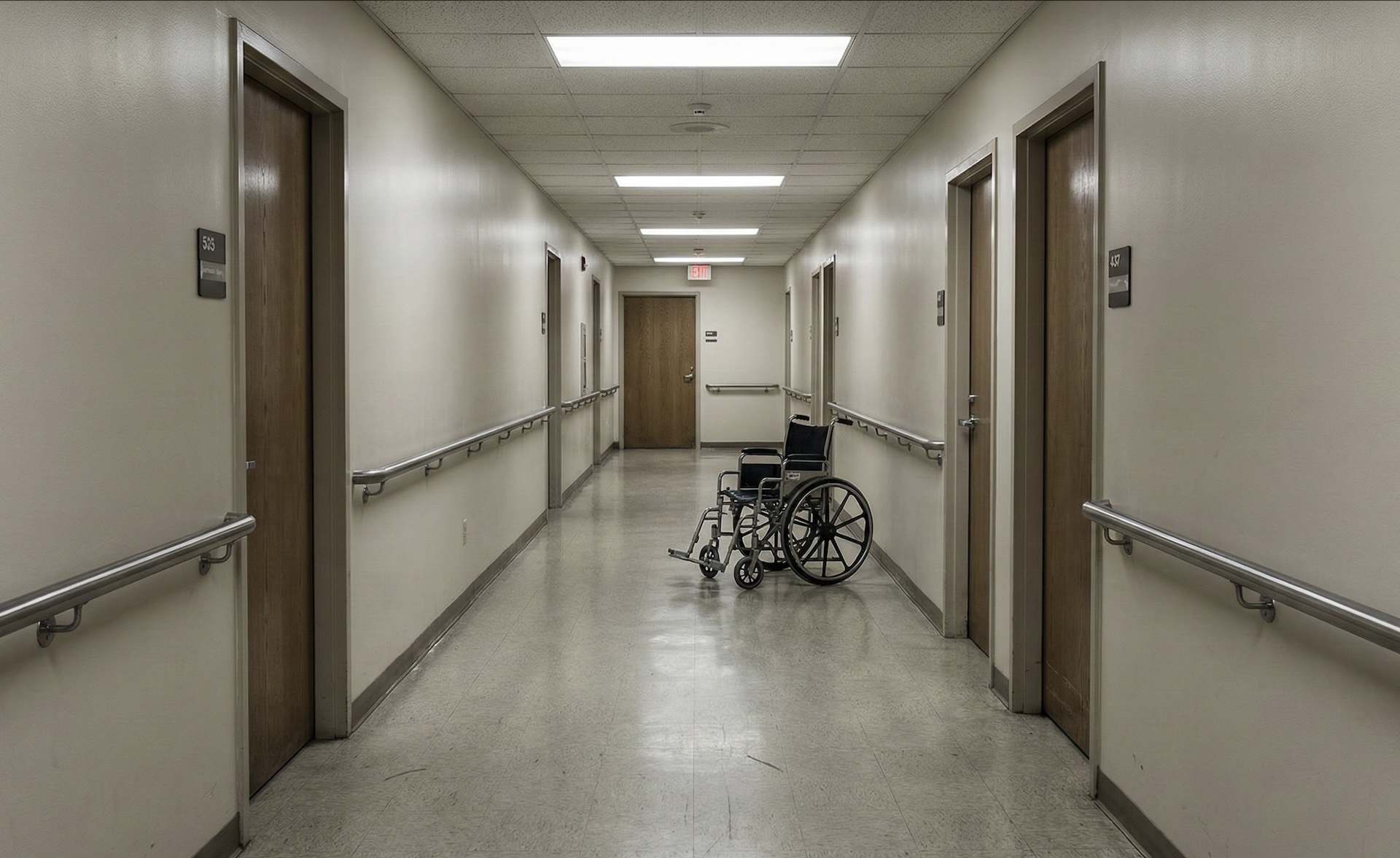
On December 2, 2025, the Centers for Medicare & Medicaid Services (CMS) officially repealed the minimum staffing requirements for nursing homes that were finalized just 18 months earlier. The rule - which would have required nursing homes to have a registered nurse on-site 24 hours a day and established the first-ever federal minimum staffing standards - will be eliminated effective February 2, 2026.
For families researching care options for aging parents, this isn't just policy news. It's a signal that the structural problems driving the U.S. nursing home crisis aren't being fixed - they're being codified into law for another decade. And here's the uncomfortable truth: even before the repeal, most facilities weren't meeting the standards that were supposed to take effect. The rules didn't fail because they were implemented too aggressively - they were eliminated before they could force real change.
The Rise and Fall of Federal Nursing Home Staffing Protections
A policy timeline showing how promised protections were eliminated
What Was the Original Rule?
In May 2024, CMS finalized what was supposed to be a landmark regulation. For the first time in history, the federal government would require nursing homes receiving Medicare and Medicaid funding to meet minimum staffing thresholds.
The May 2024 Requirements
- 0.55 hours per resident day (HPRD) of registered nurse care - roughly 33 minutes of RN attention per resident per day
- 24/7 RN presence - a registered nurse on-site around the clock, 7 days a week
- State documentation - states required to assess and document their staffing adequacy
These standards were already modest by international comparison and fell short of what research suggests is needed for quality care. Studies have consistently shown that staffing levels of 4.1 hours per resident day (combining RN, LPN, and aide time) are associated with better outcomes, yet most U.S. facilities operate well below this threshold.
Still, for the roughly 1.2 million Americans living in nursing homes, even these minimal protections represented progress.
What the Repeal Eliminates
The December 2025 repeal doesn't just delay implementation - it eliminates the requirements entirely and prevents any new federal staffing mandates for nearly a decade.
What's Gone
- ELIMINATED The 0.55 HPRD RN requirement
- ELIMINATED The 24/7 registered nurse requirement
- REVERTED Back to old standard: "RN for at least 8 consecutive hours a day, 7 days a week"
- BLOCKED Moratorium on federal staffing requirements through October 1, 2034
What this means: Under the old (now restored) standard, a nursing home can legally operate with no registered nurse on-site for 16 hours every day. During nights and weekends - when falls, medical emergencies, and acute changes in condition often occur - there is no federal requirement for an RN to be present.
The 16-Hour Gap
When No Registered Nurse Is Required
by federal law
Under the restored federal standard, nursing homes are only required to have a registered nurse on-site for 8 consecutive hours per day.
The Staffing Crisis by the Numbers
The repeal comes at a time when the nursing home staffing crisis has reached historic levels. And the situation on the ground is even worse than the policy debate suggests.
The RN requirements get the headlines, but the real care gap is in direct caregiving. Nursing aides - the staff who actually help residents eat, bathe, dress, a - d move - are stretched impossibly thin. Federal data shows that facilities staffing below minimums average just 1.97 hours per resident day of nurse aide care, meaning each aide is responsible for 12 to 13 residents simultaneously. At night, some states allow ratios as thin as 1:20.
Research has consistently shown that staffing levels of 4.1 hours per resident day are needed for quality care. Yet only 25% of U.S. nursing homes achieve this level. The national average sits at 3.68 HPRD - and that average masks facilities where care is far worse.
The consequences are predictable and documented. Research published in health policy journals has found that low staffing levels correlate with increased falls, pressure ulcers, weight loss, and preventable hospitalizations. A landmark study in Health Services Research found that increasing RN staffing by just 0.2 hours per resident day was associated with a 5% reduction in mortality.
When staff are stretched across too many residents, the care that suffers first is the care that takes time: repositioning patients to prevent bedsores, assistance with meals to maintain nutrition, monitoring for subtle changes in condition, and simple human companionship.
What Was Promised vs. Current Reality
The May 2024 federal staffing rule was repealed before implementation
Why the Repeal Happened
The nursing home industry lobbied aggressively against the May 2024 rule from the moment it was proposed. The American Health Care Association, which represents the majority of for-profit nursing homes, argued that the standards were "impossible to meet" given current workforce shortages.
Industry groups framed the debate as a choice between staffing mandates and facility closures, warning that rural nursing homes in particular would be forced to shut down if required to meet the new standards.
The Uncomfortable Question
The industry's argument has a certain logic - you can't hire workers who don't exist. But it sidesteps uncomfortable questions about why workers don't exist.
Nursing aides in the U.S. earn a median wage of approximately $17 per hour, often without benefits, while doing physically demanding and emotionally exhausting work. The industry generates over $90 billion in annual revenue, yet persistently underpays the workers who provide direct care.
The repeal represents a policy choice: rather than address the economic conditions that make staffing impossible, the government has chosen to eliminate the requirement to try.
What This Means for Families
If you're researching care options for a parent or loved one, the policy landscape just became clearer - and not in a reassuring way.
Federal protections aren't coming
The moratorium through 2034 means families cannot expect meaningful federal intervention in nursing home staffing for nearly a decade. Whatever care standards exist will be determined by state regulations (which vary dramatically) and market forces.
Staffing varies wildly - and changes over time
Without federal minimums, the gap between well-staffed facilities and understaffed ones will likely widen. The facility that seems adequately staffed during your Tuesday afternoon tour may look very different at 2 AM on a Sunday.
"Quality ratings" don't tell the full story
CMS's Five-Star Quality Rating System includes staffing as one component, but ratings can be manipulated and don't capture the day-to-day reality of care. A facility can receive a reasonable rating while still operating with dangerously thin staffing on nights and weekends.
Cost doesn't guarantee quality
The median cost of a private room in a U.S. nursing home now exceeds $9,000 per month - over $110,000 annually. Yet research consistently shows that high cost does not reliably predict high staffing levels or better outcomes. Many expensive facilities operate with the same 1:10 or 1:15 aide-to-resident ratios as budget options.
The Questions Families Should Ask
Given this regulatory environment, families need to conduct their own due diligence. When evaluating any care facility, ask specific questions about staffing:
- What is the RN-to-resident ratio on day shift? Night shift? Weekends?
- What is the aide-to-resident ratio during those same periods?
- What is the staff turnover rate, and how long has the current nursing director been in the role?
- Is there an RN on-site 24 hours a day, or only during certain hours?
Request this information in writing. Facilities that won't provide it are telling you something.
Visit unannounced at different times - evening, early morning, weekends. Observe whether call lights are answered promptly, whether residents appear clean and well-groomed, whether staff seem rushed or have time to interact with residents.
Looking Beyond Traditional Options
The repeal of federal staffing standards is one more data point in a longer trend. The U.S. nursing home system was designed in an era of different economics, different demographics, and different expectations. The model has been showing signs of strain for decades.
Some families are responding by keeping parents at home longer, hiring private caregivers, or exploring alternative care arrangements. Each of these options has its own trade-offs and limitations, but they represent an acknowledgment that the default assumption - "when Mom can't live alone, she'll go to a nursing home" - deserves more scrutiny than it once received.
The Relevant Question
For families willing to think beyond conventional options, the relevant question isn't just "which nursing home?" but "what care model actually makes quality care economically possible?"
The U.S. model makes quality care economically difficult through a combination of high real estate costs, high liability insurance, high administrative overhead, and low reimbursement rates that create constant pressure to minimize staffing. These structural factors don't disappear just because a family is willing to pay more.
Different economic environments produce different possibilities. That's not a criticism of American healthcare workers - it's a recognition that systems matter, and the system families are navigating was just stripped of even its minimal planned protections.
The Path Forward
The repeal of federal staffing standards isn't the end of the conversation about nursing home quality - but it does clarify the terms. And the terms are not encouraging.
Consider what the data tells us: even when federal standards were on the books, 70% of nursing homes weren't meeting them. The industry's response wasn't to hire more staff - it was to lobby for repeal. They succeeded. The moratorium through 2034 doesn't just pause progress; it guarantees nearly a decade where even the modest 2024 standards cannot be reinstated.
For the next decade, families cannot rely on federal regulators to ensure minimum care standards. The burden of due diligence falls entirely on families, most of whom are making these decisions during a crisis, with limited information, under enormous emotional stress.
That's not how it should be. But it is, currently, how it is.
For families in the early stages of planning - before a crisis forces rushed decisions - the repeal is a reminder to start researching options now, to ask hard questions, and to think critically about assumptions that may have been true 20 years ago but aren't necessarily true today.
The system isn't getting fixed. Families need to make decisions accordingly.
Sources
- CMS Final Rule: Medicare and Medicaid Programs; Minimum Staffing Standards for Long-Term Care Facilities (May 2024)
- Federal Register: CMS Final Rule - Repeal of Minimum Staffing Standards (December 2025)
- HHS ASPE: Nurse Staffing Estimates in US Nursing Homes (May 2024) — Analysis showing 70% of facilities below nurse aide minimums
- NursingHome411: Nursing Home Staffing Q1 2024 — National staffing averages and state-by-state data
- IntelyCare: CNA Patient Ratio Laws by State
- American Health Care Association: State of the Nursing Home Industry (2024)
- Health Services Research: Nursing Home Staffing and Quality of Care