Caring with Compassion: Easing the Stigma of Nursing Home Placement

This emphasizes how children can reciprocate the unwavering affection their parents poured unto them throughout their lives, a deeper way to demonstrate gratitude for being nurtured as a fragile seedling to become sturdy trees, gloriously fruit bearing.
With the norms gradually embracing the changes in society, sadly, fulfilling this promise of devotion oftentimes comes to a compromise.
Reality Bites: With Great Power Comes Great Responsibility

The age at which "adulting" starts differs. Commonly, legal adulthood begins at 18, while the feeling of being an adult can start anywhere from the early 20s to the late 20s, or even later.
As people grow older, their lives tend to revolve around several benchmarks - paying bills, establishing a career, buying a home, maintaining a relationship, even building their own families. These are just some of the countless standard markers of adulthood a person is expected to meet. As people become more independently powerful walking away from home, they continue to leap forward, in places almost impossible to look back.
Starting from the anxiety to budget the first paycheck to realizing the growing inflation rate and high cost of living, plus balancing the wants and needs, with heartaches from first love to the "will-not-fall-again" mantra - could be more than enough to swamp up a person's mind.
While everyone's trying not to drown in these deep waters, can they still swim and endure the additional weight of looking after their parents, alone, painstakingly waiting at home?
Reversed Roles: How to Cope Up?

In the first decades of life, parents have been their children's safe zone. When they break down in tears and lash out, they are there. They became their feet whenever they got tired of walking and rather be carried in piggyback. Unwell, robust, downhearted, contented - their children's emotions, they all witnessed. What did they offer? Sacrificial love.
But as the chapters of life continue to turn, parents age as their children do. The ones who once did the caring, now need to be taken care of. The ones who once taught a child how to walk, now need to grab a cane to even take a single step. In order to look after an elderly in the most appropriate ways possible, thorough assessment is a must.
Expert Advice: Dr. Hillary Lum
According to Dr. Hillary Lum, an associate professor of medicine at the University of Colorado School of Medicine's Division of Geriatric Medicine, having a personal conversation with your parents, regularly checking in on their day might be a great start to probe if they need help.
Important to remember: Not everyone undergoes the same process of aging, whether physically, mentally or emotionally. Relatively, one must be prepared for the results because the situation might require one's willingness and availability to step in.

This might necessitate focused time and attention; stable finances for specialty pharmacy medications and additional accessories like installation of safety rails on walls and anti-slip mats all over the place; and even tedious tasks switching between work, social life and finding time for ample rest.
Care Options: Finding the Right Fit
Levels of Care Support
Minimal Supervision
Some elderly might require minimal supervision and additional assistance when it comes to fulfilling their activities of daily living (ADL's) in which a home nurse or caregiver can be hired to lend them an extra hand while waiting for the relatives to arrive and finally take over.
Adult Day Centers
Bringing them to an adult day center, where they can socialize and meaningfully spend half of their days before relatives fetch and drive them home, is also a fair option.
Senior Care Facilities
But if their condition entails more help than the relatives can provide, to the extent that the requisites might outweigh the four corners of home, sheltering them in Senior Care Facilities might enter the picture.
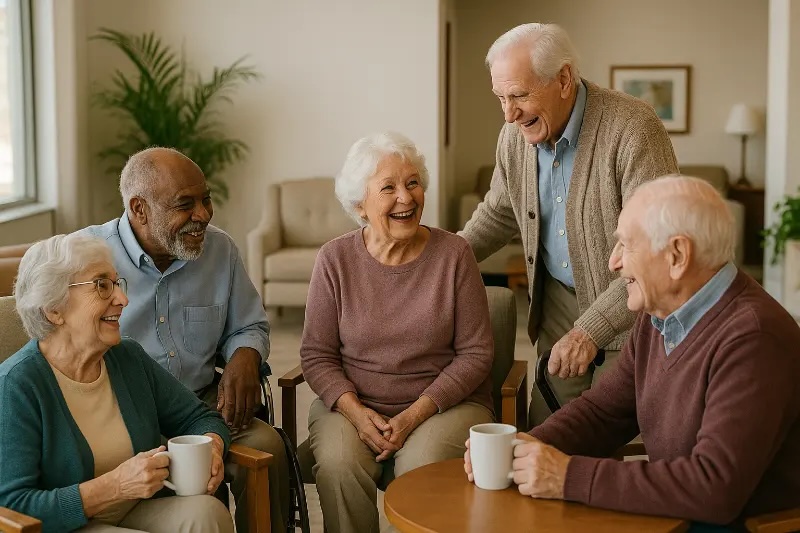
Family: A Bond that Transcends Time and Distance
Sending a parent or elder relative to a Senior Care facility is never negligence.
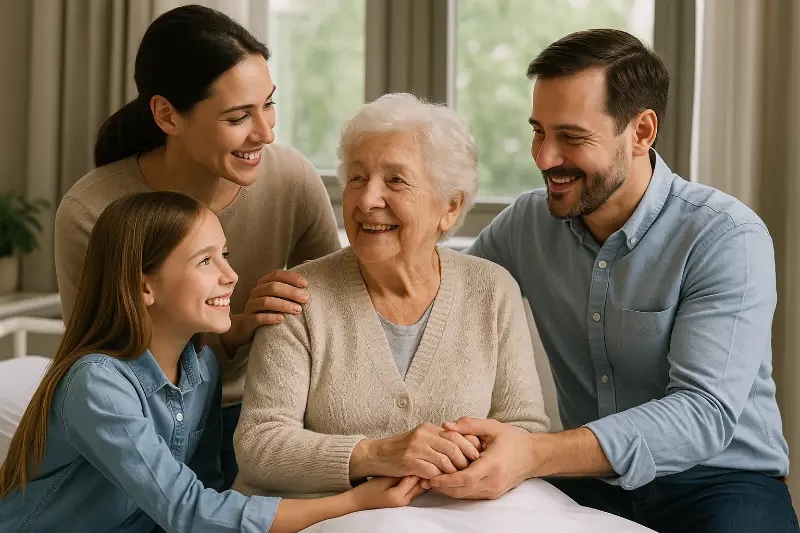
It is expected that the younger age group in the family should look out for the welfare of the older generations - the former casts eyes on the latter. The fact that families always stand as solid support to each other, various factors nowadays, affect their capacity to provide what the other family members need.
Around 1.5 million elderly individuals need help with three or more activities of daily living (ADLs), which often necessitates either extensive home care or professional facility care.
Why Senior Care Facilities Make Sense
1. Changing Family Structures
Traditional family structures are changing, with more women donning uniforms to join the paid workforce, a significant decrease in the availability of home-based care for older adults directly declines.
2. Sense of Belonging
Moreover, the sense of belongingness a senior community can provide uplifts the positive spirit of elder individuals, thus, enabling them to overcome the shades of loneliness and being left out.
3. Maintaining Independence
Lastly, the independence from being away from their children and relatives can somehow rebuild the resilience of an elderly, at the same time being dependent on the support they can find in the pillars of their "Second Home".

A Thoughtful Act of Love
So the next time you hear that choosing a care facility is merely sending off a loved one to another home to avoid personal hassles, think twice. Because letting go of someone where they can find the tranquility of mind, the strength that they once lost and the attention that they once longed for, will be the hardest of all decisions to make, but maybe the best one for their own sake.
Deciding to find a place where they can be showered with care as compassionate as a family member can give is not setting aside responsibility, instead it is a thoughtful act of genuine affection.

Conclusion
The decision to choose a senior care facility for your loved ones is one of the most difficult choices families face. It's not about abandoning responsibility or taking the easy way out - it's about recognizing when professional care can provide what family members, despite their best efforts and deepest love, cannot always deliver.
Modern life presents complex challenges: demanding careers, financial pressures, geographic distances, and the intricate needs of aging parents. Acknowledging these realities doesn't diminish our love or commitment. Rather, seeking the best possible care, even when that means a professional facility, demonstrates profound love and respect for those who raised us.
The key is finding facilities that treat residents with dignity, provide compassionate care, maintain appropriate staffing ratios, and foster genuine connections - places where your loved ones are treated as family members, not as revenue units.
Sources
- Digital Journal - Adulting Then and Now: How Growing Up Has Changed
- Dr. Hillary Lum, University of Colorado School of Medicine's Division of Geriatric Medicine